Saturday, 13 September 2014

Geoff Love and his Orchestra

The first album I ever bought was a copy of 'Star Wars and other Space Themes'  by Geoff Love and his Orchestra.  It was about 1979 and I bought it in a jumble sale in the next town along from the one I grew up in.  I think I paid a staggering 10 pence for it but I can't be sure.  I remember my mother looking at it disdainfully and asking what on Earth I wanted it for which even at the time - at the grand old age of 9 - I thought was the stupidest question ever.  I mean look at it.  It's beautiful


Almost everything about that cover was designed to ever so slightly avoid copyright infringement.

Buy it here - Geoff Love & His Orchestra - Star Wars and other space themes & Close Encounters of the Third Kind and other disco galactic themes

She relented and I walked home the happiest kid in town and only got happier when the needle hit the groove.  I cannot begin to tell you the joy this album gives me.  The version of the Doctor Who theme is to die for and Star Trek isn't too far behind.  This was the beginning for me of a love for rearranged cheesy lounge music that has never gone away.

A good few years later a friend - now sadly no longer with us - turned up at my house with a gift he'd dug out of the back of a cupboard where it had languished for about a decade.  He handed me the carrier bag and my breath caught in my throat as I pulled the ugliest LP cover ever made from the bag.


But, oh my.  the track listing.  The perfect, and I do mean perfect, sister album to the one I already had.

It's another frankly awesome experience of the finest aural cheese.  The drum break in Batman is blistering.  Steve Austin never sounded so kitsch, Wonder Woman would still be shaking her star spangled booty and Spider Man is doing anything a spider can but he's doing it with a strut.

There are a couple of odd choices in there that don't really live up to the superhero billing.  Dick Barton, The Saint and Blake's Seven not really living up to the title but album run times need to be filled and there were only so many superhero films and TV shows.


It was on the frankly insane 'Close Encounters...' album - credited to Geoff Love's Big Disco Sound - that Blake's Seven (check out the copyright free Liberator on the album sleeve) really came into it's own.  Along with the Omega Man theme it's the highlight of a collection of very unlikely disco reconstructions of sci-fi themes.

Buy it here - Geoff Love & His Orchestra - Star Wars and other space themes & Close Encounters of the Third Kind and other disco galactic themes
(NB - It's the same link as the one above)

Through the rest of his career Love continued to churn out the reworked themes.  Westerns, TV shows, disaster movies all felt his baton waved over them.  The Bond one is another to look out for.


He also did many, many more albums of love themes, kids music, etc.  There're not 1, not 2 but 3 double LPs of Sing-Along Banjo Party, several with Shirley Bassey and one with the most 1970s British sounding titles ever 'The Biggest Pub Party in the World: 36 Boozy Ballads'.

Anyway,  if you live in the UK and have ever looked in the record racks of a charity shop you will have seen many of Geoff's albums.  I counted 23 in one box once. Most of them are pretty awful but in amongst them are some real gems like the ones above.  So, to celebrate Mr Love and his busy, busy orchestra here is a mix I've made featuring some of my favourites from the 4 albums I've shown you up there.  Hope you enjoy.


Friday, 12 September 2014

Collected Ghost Stories

M. R. James
Wordsworth Editions

These stories have been on my wish list for years and I simply have never had either the time or the head space for them. When the time finally came I made it into an event and made it last as long as I could.  I've been eking them out for months. I'm glad I did too as there is a fairly strong similarity between the stories and I think I would have got quite bored and missed out on just how good many of these stories actually are.

Here in the UK James' stories have become something of a Xmas tradition with adaptations of 9 of his stories having been produced for the BBC.  As such I knew some of the stories, particularly 'Oh, Whistle and I'll Come  To You, My Lad' and 'Lost  Hearts'.

Montague Rhodes James spent  a large chunk of his adult life within the academic environs of Cambridge and it was there that he began producing ghost stories as a way of entertaining friends and colleagues.  His stories very much reflect his audience as they often feature fusty men of letters,  often an object found or collected - a book, a pair of binoculars, a whistle - that triggers the events or even something as simple as greed that initiates terrible events.

He is rarely, if ever, particularly overt in describing the horrors that befall.  In James' stories it is that something unpleasant has happened within what  is generally first established to be a genteel, mannered, respectable or polite setting.  The horror is in the shattering of the ordinary by the extraordinary and strangely, for a man with religious convictions these rarely feature.  Instead there is often an almost pagan rural horror to the stories, an air of the old times influencing the new.

As I said earlier I've been reading this for most of the last year.  I'd finish a novel and then pick this up and read a tale or two before disappearing into the next novel.  This helped.  I'm not the worlds biggest fan of short story anthologies and so this method made it feel like a real treat.

The stories, though maybe a little mild by modern tastes still maintain a fine level of creepy.  The obvious classics like the ones I mentioned earlier here have stood the test of time beautifully and are every bit as horrific as they ever were; 'Lost  Hearts' for example would need very little alteration for it to be the most modern of tales.

So, an ambition fulfilled.  The ghost stories of M. R. James read and thoroughly enjoyed.  They are very much recommended to anyone with an interest in the ghost genre or rural horror but I think perhaps there's much here to satisfy even a passing curiosity.

M. R. James

Montague Rhodes James (1862 - 1936)  was an English writer of some of the most enduring ghost stories of all time.

He attended King's College, Cambridge as an undergraduate, then as a don and finally as provost, a post he subsequently held at Eton College until his death.  His work as a mediaevalist was profound and still well respected but it is for his 30 ghost stories that he is most keenly remembered.

His fans have been many and diverse numbering amongst them, H.P. Lovecraft, Kingsley Amis and Ruth Rendell. His stature as our pre-eminent writer of ghost stories has been cemented in the late 20th and early 21st as he has become the most popular source for the BBC's annual 'A Ghost Story for Christmas' with 9 of the 12 films being adapted from his works; most recently Mark Gatiss' adaptation of 'The Tractate Middoth' screened on Christmas Day 2013.

Also screened that day was this excellent documentary also by Gatiss of the life and influence of James to which I now direct your attention.

Thursday, 11 September 2014

Unearthing

Alan Moore
Top Shelf Productions and Knockabout

This was an utterly astounding audiobook read by the man himself with music from a variety of experimental musicians including Justin Broadrick, Stuart Braithwaite & Mike Patton.

The story or let's say narrative concerns the biography of friend and fellow comic writer Steve Moore. It is an examination of both man and place and the very personal forms of magick that these things conjure up.

Steve Moore it transpires has lived in the same house his entire life. The house is situated on Shooters Hill in London and in typical Alan Moore fashion this location becomes as central to the narrative as Steve Moore is.

Steve Moore (R.I.P.)
As a biography it's a tale of a life defined by a series of obsessions - sci-fi, arcana, writing - that would, in lesser hands, be a fairly tedious read. In Alan Moore's hands however (and with the beautifully subtle background music) it becomes a lyrical and evocative dance through passion and loss, obsession and loneliness, creativity and magick.

Absolutely superb.


Wednesday, 10 September 2014

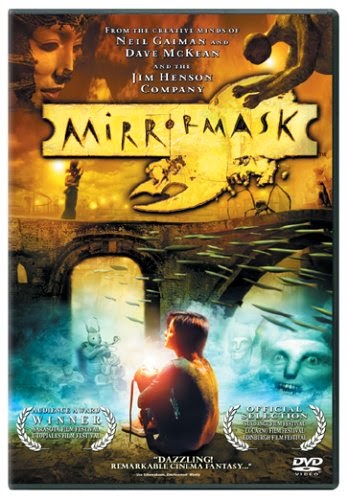
Mirrormask

A movie written by Neil Gaiman and directed by Dave McKean was always going to be a pretty enticing prospect for me.  

I love Gaiman's writing.  His worlds are ones populated by characters and situations usually more at home in fairytales (the original pre-Victorian ones not their crappy watered down versions) and gothic horrors.  I love McKean's art for essentially the same reasons.

Mirrormask tells the story of Helena (Stephanie Leonidas) a young girl dreaming of running away from the circus to join real life.  She gets her wish when her mum, Joanne (Gina McKee), is rushed to hospital and she and her dad (Rob Brydon) are forced to stay in a drab, grey tower block while they wait for Joanne's operation.

Helena decorates her world with ink drawings that she plasters all over the walls, the balcony, the fire doors that - in Dave McKean's fabulous style - portray a vast aray of characters, creatures and buildings.  A make believe world which - as tends to happen in these sort of things - is where Helena soon finds herself stuck in what may be her dream or may also be Joanne's dreaming mind as she is operated on.

Inside the 'dream' world Helena makes the aquaintance of a juggler named Valentine (Jason Barry) with whom she sets off on a quest - inevitably - to wake the The Queen of Light and defeat The Queen of Shadows (both also played by Gina McKee) by locating the titular Mirrormask.

Storywise it's a fairly heavy handed exploration of illness - the sleeping mother being attacked by the black cancerous tendrils causing the world to collapse around Helena - and personality - the duality of Helena's love for her family and friends and her desire to find herself and her own way in life and of course the masks themselves.  But, there's penty of warmth and humour enough that for the most part you don't feel like you're getting slapped around the head constantly.

I remember at the time it came out all the pre-release hype, interviews and then the extras on the DVD kept referring to the tiny budget. At the time I thought they were labouring a point but now I know why.  Essentially the film consists of lots of static set pieces with the actors reduced to talking and gesticulating their way through the scenes instead of being allowed to move around the, visually sumptuous, world that McKean has created.  You are utterly immersed in the McKean's beautiful art and the scope of both creators vision for the movie is readily apparent as the use of green screen (for almost the entire movie) allowed them to build an utterly fantastical reality but which, in turn, stiffled both the actors and ultimately the movie.

Lastly, it is a shame that they aimed this at kids. I can't help but feel that it really would have benefited if they'd got a lot darker, a lot creepier and a hell of lot scarier.  That said though it's an enjoyable enough distraction for 90 minutes and even if you're not paying it much attention it makes for frankly lovely wallpaper.


Monday, 8 September 2014

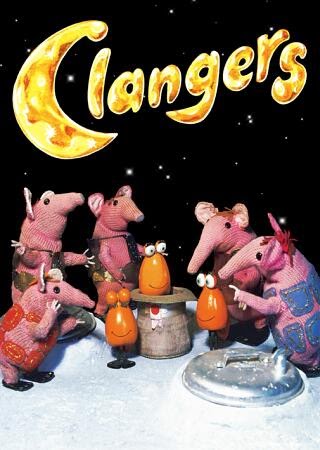
The Return of The Clangers

It's been pretty much common knowledge for a while now that The Clangers were making a return to our TV screens in the near future with Peter Firmin along with Oliver Postgate's son Daniel working towards that end.

Well, in a masterstroke of casting the BBC has reported today that Michael Palin has been hired on to provide the narration.  Bereft of the magnificent voice of the sadly departed elder Postgate the narration was always going to be a sticky point but personally I think they couldn't have chosen better.

more details after the click - http://www.bbc.co.uk/news/entertainment-arts-29107225

For those of you unfamiliar with The Clangers...

Originally created in 1969 by (modelmaker and illustrator) Firmin and (writer, animator and narrator) Postgate's Smallfilms who had previously produced animated shows such as Ivor the Engine, Noggin the Nog and Pogle's Wood and who would go on to produce Bagpuss.  The Clangers are a small family of pink mouse like creatures - named Granny, Major, Mother, Tiny and Small Clanger - who live on and in a small planet along with The Soup Dragon (and her baby), The Froglets, The Iron Chicken, The Cloud and The Music Trees.

At this point in response to anyone thinking - rather tediously - 'What were they on?' - the answer is pure, unfettered, glorious imagination.

The Clangers spoke in a musical whistle created by using a slide (or swanee) whistle.  Their dialogue however was all scripted and then reproduced through the instruments.  This allowed Postgate to be rather more adventurous with the dialogue than the BBC would have liked with the episode 'Chicken' containing what became the most famous piece of Clanger speak (at 55 seconds in).

 
Here's Stephen Fry discussing it on QI if you can't make it out...


Only 27 episodes (two series and one - lost - special) of The Clangers were made but to this day they hold (as does much of Postgate and Firmin's work) a special place in hearts of entire generations of Brits who grew up in the 70s and 80s and it's good to know that they will be soon be entertaining entirely new generations.

Sunday, 7 September 2014

The Martians and Us: The History Of British Science Fiction

Wyrd Britain reviews the BBC documentary, 'The Martians and Us'.
Narrated by the 12th Doctor, Peter Capaldi this three part BBC series from 2006 covers many of the classics of the genre - both written and filmed - trying to put them in some sort of context of the times they were written and the lives of their authors. 

Episode 1: From Apes to Aliens explores the dawn of the science age with particular attention to H. G. Wells, Olaf Stapledon and Arthur C. Clarke who appears here as one of the talking heads along with Brian Aldiss, Doris Lessing, Brian Stapleford, Kim Newman and others.

Episode 2: Trouble in Paradise (Dystopias) discusses the British talent for imagining the most hideous dystopian societies looking particularly at the two masters, Aldous Huxley & George Orwell along with Nigel Kneale's 'The Year of the Sex Olympics', 'A Clockwork Orange' and '1985' by Anthony Burgess and Margaret Atwood's 'The Handmaid's Tale'. 

Episode 3: The End of the World as We Know It closes the series with a look at my personal favourite of all the sci fi genres, the apocalypse and it's aftermath.  Within this episode we visit my favourite book, John Wyndham's 'The Day of the Triffids' along with John Christopher's superb 'The Death of Grass', J. G. Ballard's 'The Drowned World' and TV apocalypses Survivors, Threads and The Hitchhikers Guide to the Galaxy.

It's a beautifully made documentary that takes both time and care to present a well rounded examination of it's subject matter through the words of the authors themselves, their contemporaries and a smattering of academics.  The very nature of the beast means that much is omitted and books are very much the focus over TV and film, which is no bad thing, but it is thoroughly enjoyable and filled with tantalising insights into many of the defining works of British SF literature.

...........................................................................


Saturday, 6 September 2014

A Field in England OST

For me one of the crowning glories of Ben Wheatley's fabulous 'A Field in England' is the score written for the movie by Jim Williams and featuring contributions from Martin Pavey, Blanck Mass & Richard Glover.  

Within the film the music exists almost as a character in itself as it forces itself into the narrative - never more so than when Richard Glover sings 'Baloo My Boy' directly into camera.  Williams has created a score that feels alive.  It has body and texture, it moves, it breathes and it surprises as it is utterly at home within the movie.
Outside the context of the film though it's possibly even better.  A gigantic, roiling beast of a thing filled with tumultuous drones, grand sweeps, delicate melodies and gritty ambiences.  For a soundtrack album to work outside of the movie is always a treat; for it to work this well is a rarity and a glorious achievement on the part of Williams and his compatriots.

I'm a huge fan of ambient / drone / experimental / whatever you want to call it music (it's what I do when I'm not here - www.quietworld.co.uk) and this is as fine an example as you will ever find and I wholeheartedly recommend it to you.


One complaint though.  Why was this only ever released as a now almost impossible to find, and if you can find then impossible to afford, limited edition vinyl and as a download?  The movie has been championed as being a 'multiple platform' release so why not the soundtrack?

Finally, I'm going to leave you with a little video about the making of the score.


A Field in England

I'd had plenty of advice regarding 'A Field in England' before watching; watch it stoned, don't watch it stoned, watch it drunk, don't watch it drunk, watch it alone, with friends, late at night, turned slightly to the left, with one hand in wallpaper paste, etc, etc, etc. Way more advice in fact than opinions. Those tended to come along as fairly definite binary oppositions; "It's amazing!" or "It's awful!"

I've never been particularly good at taking advice though and being a typically arrogant zine writer or blogger or whatever we're called this week my own opinion is the only one that counts (that's not strictly true by the way - there're at least three other people whose opinions I tolerate). So, I waited till the time suited and dropped myself into Ben Wheatley's English field.

It's amazing!

Every shot is a beautiful thing as we follow our four - then five - Civil War era gentlemen as a man at the end of his rope meets a man at the end of his tether.

Reese Shearsmith as Whitehead
Cowardly alchemists apprentice Whitehead (Reese Shearsmith) is a man trying to live up to his 'responsibilities' to his master and locate some papers stolen by O'Neill (Michael Smiley). Along with two deserters - the pox riddled Jacob and the hapless (and very funny) Friend - they are 'guided' across the field by the brutal Cutler until they find O'Neill at the end of a very long rope.

From here on in as the psychedelic mushrooms forced onto the hapless trio by Cutler and O'Neill take them deeper down the rabbit hole the narrative begins to fracture at the same rate as their psyches. Magic, madness, mushrooms and mortality flow through each other until the tether holding Whitehead to his unwanted duty and the unfulfilling life it has brought him finally snaps.

Richard Glover as Friend
It isn't a perfect film. The sound is often muddy leaving much dialogue mired in a muffled gloop and the morphing visuals during the climax are a little hackneyed - but still fun. Like I said though it's beautiful to look at and often even fiercely brutal or bitingly funny. The ensemble cast are all at the top of their games and each entirely walks in their characters skins and whilst there's a part of me that thinks it wrong to point to any one actor in particular it is Richard Glover's fabulously understated Friend that really shone for me.

Finally, the soundtrack. So seamlessly woven through the narrative ambient soundscapes, folk songs sung direct to camera and incidental music that feels anything but. It is almost a character in it's own right so integral is it to the movie.

'A Field in England' is phenomenal achievement. For such a low key, undemonstrative and downright odd movie to be able to hold your attention so keenly whilst being quite so preposterous is absolutely to the credit and talent of all involved.


PS - In case you're wondering, I watched it at night, alone and sober but moving steadily towards drunk.

Arthur Rackham

Today marks the 75th anniversary of the death of one of Britain's finest and most celebrated book illustrators, Arthur Rackham.

Rackham, born in London on 19th September 1867, began his career as an illustrator in 1894 and continued to work up until his death from cancer in 1939.  His dexterous, bold and detailed line work partnered with his eye for the essence of a story, the beauty of his figurework and a sense of mischievous dark humour made him hugely popular at various points in his career and it is a fame that continues unabated to this day.

His portfolio is huge but he is perhaps most notably associated with Alice in Wonderland (for which his illustrations are arguably as famous as those of original illustrator John Tenniel), Peter Pan in Kensington Gardens, A Midsummer Night's Dream (along with various other Shakespeare works), Poe's Tales of Mystery and Imagination and various books of fairy tales from around the world.


Friday, 5 September 2014

Good Omens on Radio 4

It's just been announced earlier today (September 5th) that BBC Radio 4 are going to follow up their successful dramatisation of Neil Gaiman's 'Neverwhere' with an adaptation of his and Terry Pratchett's 'Good Omens'.

I absolutely adore 'Good Omens'. First time I read it I laughed so hard that I honestly thought I'd damaged my throat at one point.  The BBC have always been top notch at radio plays - if you at all doubt me on this go and check out the Sherlock Holmes series they did with Clive Merrison and Michael Williams for a masterclass of the genre - and with a cast like the one announced this should be a real treat.

more info at the link.
http://www.bbc.co.uk/mediacentre/latestnews/2014/r4-good-omens

Wednesday, 3 September 2014

Broken Homes (Rivers of London 4)

And so we take our fourth visit into the magical division of the Metropolitan Police as represented by the triumvirate of apprentice wizards PCs Peter Grant & Lesley May and their boss and real, actual, genuine wizard Detective Chief Inspector Thomas Nightingale not to mention Toby the dog and Molly the housekeeper. This one is an absolute corker. It begins with a crash and a body and ends with a crash and a betrayal.

Unlike the third book in the series - 'Whispers Underground' - 'Broken Homes' is all about the bigger story which was made all the more fun after that other books avoidance of it. Here it's all about foiling the Faceless Man's plan and so Peter and Lesley find themselves shacked up in a high rise tower block trying to work out what interest it holds for their adversary.

The story absolutely tanks along with barely a moments rest. We are introduced to several of the other denizens of supernatural London - another river and a tree spirit - and also get to see a little - and I do mean a little - of the spring fair meeting of the various London rivers.

Aaronovitch has a clean and easy style filled with sneaky little references - my favourite here being an Arlo Guthrie, Alice's Restaurant one - and chatty asides that draw you in and make you feel right at home in this preposterous world.

I am loving these books and they've become my fun read; the one I look forward to because I know it'll be a right romp from start to finish and so long may they continue.

Buy it here:  Broken Homes: The Fourth Rivers of London novel (A Rivers of London novel)

...........................................................................
My write up of books 1, 2 & 3 can be found here.

Saturday, 30 August 2014

X the Unknown

That esteemed home of dry facts and vile commenting IMDB tags X the Unknown with the rather marvellous one sentence synopsis, 'Radioactive mud-like creature terrorises a Scottish village during the 1950's.'  It's not entirely accurate but in essence pretty much sums up this little gem.

X the Unknown was made in 1956 by Hammer initially intended as a follow up to The Quatermass Xperiment (can you spot the similarity) but were denied use of the title character by Nigel Kneale.  Continuing regardless with both the movie and also with the practise of casting an American in the title role, Dean Jagger here and Brian Donlevy in the first two Quatermass movies, in order to hopefully widen the appeal of the film to US audiences regardless of whether the presence of an American working in a Scottish nuclear research testing station or even running the British Experimental Rocket Group was at all incongruous.

The Unknown X of the title is a large blob creature from the dawn of time that feeds on radiation.  It is drawn to the surface by soldiers conducting Geiger Counter field tests and soon begins to hone in on rather more sumptuous feasts including the experiments and workplace of our Bernard Quatermass substitute, Dean Jagger's  Dr. Adam Royston.

Jagger has far too little charisma to hold his own at the centre of the film but is ably assisted by a strong supporting cast that includes Edward Chapman (more famous for his role as Mr. Grimsdale opposite Norman Wisdom), Leo (Rumpole of the Bailey) McKern and Anthony Newley in a short but sweet role as Lance Corporal "Spider" Webb whose delivery of the word 'Tea' (and his short scene that follows) is just perfect.

There's a reason X the Unknown isn't as fondly remembered or celebrated as the Quatermass movies, it just isn't as good but few things are.  It does however maintain a fairly breathless pace throughout, has some nice set pieces and isn't afraid to let things get a little gory and intense (the lustful radiographers melting face being the main thing that springs to mind here).  It has it's charm and it has it's fans (including me) and at only 75 minutes is a great way to while away an afternoon.


..........................................................................................

If you enjoy what we do here on Wyrd Britain and would like to help us continue then we would very much appreciate a donation towards keeping the blog going - paypal.me/wyrdbritain

Tuesday, 26 August 2014

'The Changes' Trilogy

Welcome to the Britain of The Changes. A Britain returned to a level of medieval peasantry by a sudden and inexplicable hatred of all machines that consumes most of the inhabitants.

Written by English writer Peter Dickinson and originally published between 1968 & 1970 tells three separate stories - originally in reverse chronological order - about life in this harsh new world.

In 1975 the series was adapted by the BBC into a 10 episode TV series which I'll talk about some other time.


The Weathermonger

"This is the time of The Changes -- a time when people, especially adults, have grown to hate machines and returned to a more primitive lifestyle. It is a time of hardship and fear! When 16-year-old Geoffrey, a "weathermonger" starts to repair his uncle's motorboat, he and his sister Sally are condemned as witches. Fleeing for their lives, they travel to France -- where they discover that everything is normal. Returning to England, they set out to discover why the country is under this mysterious spell. Only discovering the origin of the deadly magic will allow them to set the people free of its destructive influence."

This is the first of the trilogy that formed the basis for the 1970s TV series 'The Changes' although this one barely featured in the TV show at all except for a vague similarity in terms of the ending.

It's the sorry of two kids - Geoffrey and his little sister Sally - who are travelling through a Britain that is hostile, barbaric, superstitious and which has somehow regressed back to the middle ages in order to find the source of the problem. With the assistance of an ancient Rolls Royce and Geoff's (titular) weather magic the two plough their way across the country being attacked by wild boars, angry superstitious peasants and lightning whilst being pursued by a feudal lord and his pack of dogs.

It's a little romp of a book and I'm really surprised it isn't better remembered although I wonder if the drugs at the end had a part in that. Personally though I thoroughly enjoyed and I am very pleased to have the other two instalments here ready for reading.


Heartsease

At a future time in England when anyone knowledgeable about machines is severely punished as a witch, four children dare to aid in the escape of a "witch" left for dead.

The second in Dickinson's trilogy of The Changes is set an undisclosed amount of time before the first and features an entirely new set of characters.

What is almost immediately apparent here is that Dickinson has pulled back from the overtly magical nature of the first - no more weathermongery - and all that remains is the vague sense for 'wickedness' expressed by the repugnant Davey Gordon and of course the mortal terror and hatred of machines. The book is all the stronger for it too with the reigning in of the magic allowing a far more interesting and real story to unfold.

The story tells of the rescuing of a 'witch' - in actual fact an American sent to Britain to investigate The Changes - from a crude grave following his stoning by the villagers by 4 young people and their subsequent flight along the canals in the boat named in the title. It unfolds slowly and carefully marshaling it's energy until the children are ready to make their move at which point the pace is relentless and rollicking good fun.

I must admit to having been a little confused by the presence of the American though as in the first book it is established that those trying to reach Britain from outside were repelled by some force or went through The Change themselves. This does make him slightly incongruous but I wonder if Dickinson was feeling a little constrained by the 'rules' laid out in the previous book.

All told it's a lovely little read that takes it's time in the telling and does so to tell a more honest and human tale than the first.


The Devil's Children

After the mysterious Changes begin, twelve-year-old Nicola finds herself abandoned and wandering in an England where everyone has suddenly developed a horror and hatred of machines.

And so the story of The Changes ends...or begins. The third part - and the one with the most in common with the TV series - tells of young Nicky Gore and her travels with a group of Sikhs as they attempt to find a safe new home in this strange new world.

It's fabulous stuff with a story that's both tight and well paced. The Sikhs - who remain unaffected by The Changes - are portrayed as both extraordinary and ordinary. Their behaviour and mannerisms relayed and interpreted through Nicky's childish and retarded - thanks to the influence of The Change - viewpoint; her opinions softening as she gets to know, trust and like them and becomes more at home in their company.  Dickinson is unafraid of his characters and boldly displays prejudice and misunderstanding from all sides - overtly from the nearby villagers with whom the Sikhs begin trading, more subtly from the Sikhs, 'We are cleaner than Europeans.' He's also willing to have fun with them - the running gag with the Sikhs riotous discussions that invariably lead to the correct decision being made.

I've seen these books listed lately in reverse order - with this one as part 1 - but I'm very glad I read these in the order they were published as this was easily my favourite of an excellent series and a very nice way to leave this changed world.

Tuesday, 5 August 2014

Small Shadows Creep

Andre Norton (ed)
Puffin Books
1979

An antiquarian bookseller takes a sinister interest in a schoolboy who visits his shop; a pair of twins hardly old enough to walk, strike deadly terror into anyone who sees them; a young girl who died for love finds being a ghost much too enjoyable to give up. This assortment of ghost stories is eerie, touching or funny, and never quite what you expect.


One of a stack of old Puffin books I've been picking up lately and the one that jumped out at me from the pile. This is a selection of Victorian, and slightly later, ghost stories all of which feature children. It is split into three parts - Ancient Evils, Vengeful Spirits & Quiet Visitors - and features eight stories - split 3, 3, 2.

Opening, proceedings is 'Salooky' by Margery Lawrence, a very fine tale featuring her occult investigator Dr. Miles Pennoyer as he removes the deeply malevolent spirit of an Elizabethan sorcerer that is haunting his sisters new home and having a deeply troubling impact on his nephew. This is followed by what is easily the most vicious, and modern feeling, of the eight, 'Herodes Redivivus' by A.N.L. (here credited as A.B.L.) Munby. In this a young man meets a supremely creepy antiquarian bookseller and after a close call finds himself somewhat in tune with the going ons at the shop. Closing out this section was a cool little piece of rural horror - H.R. Wakefield's 'The First Sheaf' - involving intractable locals, pagan rites, an intrusive Christian and a something.

The second set features spirits of a more purposeful nature and begins with E.F. Benson's 'How Fear Departed From The Long Gallery' which is a humorous little tale whose fairly obvious ending isn't spoilt in the telling. Next is probably the book's weakest tale, Mrs Gaskell's 'The Old Nurse's Story' is a fairly transparent story of spinsters, children and past regrets. Not bad but as I said a bit obvious. The section ends with M.R. James' fabulous 'Lost Hearts' where the ghosts of children murdered in an alchemical procedure take gruesome revenge.

The final two stories are a very different kettle of fish with the ghosts being very much the benevolent heart of each tale. Hugh Walpole's 'A Little Ghost' puts a man mourning the death of his friend into a house filled with exuberant children. Escaping to his room he finds comfort and solace in the presence of a shy spirit of a young girl.

The final tale has an almost Dickensian feel to it with its tale of a crusty, aloof academic taking an orphan child into his home and allowing her free range over his library. The story, 'Playmates' by A.M. Burrage eventually finds the girl befriended by the seven ghosts who inhabit the old schoolhouse where they live. As time and circumstances soften the hearts of he and her (but not of his crotchety assistant) they both come to find a level of affection for each other and grow closer before he finally opens himself up in frankly fabulous finale.

It's a thoroughly enjoyable book. It's varied and intriguing and filled with invention, fear and finally, love.