Showing posts with label British Library. Show all posts

Monday, 6 April 2026

Possessed

Wyrd Britain reviews 'Possessed' by Rosalie & Edward Synton published as part of the British Library Tales of the Weird imprint.
Rosalie & Edward Synton
British Library

John Travers has been hanged for the murder of his mother-in-law Helga, but to those who knew him something is amiss. Driven by justice and a sense of uncanny forces at work, John’s friend Doctor Toogood recounts a haunting tale of love and jealousy under the fell influence of a shadowy and implacable evil. First published in 1927, this novel by husband-and-wife writing duo Rosalie and Edward Synton (real surname Corse-Scott) has been lost for nearly a century and returns now from the Library collections to deliver its occult thrills anew.

A newly rediscovered novel of the occult unearthed by the venerable Johnny Mains and presented here by the British Library's Tales of the Weird imprint, a most fitting home.

The Syntons, pen-names of Rosalie & Edward Corse-Scott, the former a teacher, the latter a soldier and farmer, tell an occult story of murder and manipulation across three perspectives, with the first doing most of the heavy lifting.

Sometime in the 1920s, in the aftermath of WWI, John Travers is hanged for the murder of his mother-in-law, Helga. Telling his story is his friend, and fellow Helga-hater, Dr Toogood who reveals her devious, manipulative and possibly supernatural nature as he relates the effect she had on his friend and the actions taken.  The novel's second part is provided by Travers as he awaits execution before the book ends with the maleficent mother-in-law herself.

I was really quite pleasantly surprised by this one.  Admittedly, it drags in parts but generally it's a nippy little tale with an unusual premise and an unexpected denouement. 

 ..........................................................................................

If you enjoy what we do here on Wyrd Britain and would like to help us continue then we would very much welcome a donation towards keeping the blog going - paypal.me/wyrdbritain

Affiliate links are provided for your convenience and to help mitigate running costs.

Wednesday, 25 February 2026

The Wayfarer's Weird: Wild Tales of Uncanny Rambles

The British Library

“Come tonight,” I heard the old man say, “come to me tonight into the Wood of the Dead.” 
Join Weird Walk for a new journey into the ghostly and bizarre, striking out from the shelter of the inn for the places where the path begins to fade, from the sublime wilderness of mountains, coasts and ravines to forbidden, ancient tracts of woodland. 
Featuring disorientating classics from John Buchan and Algernon Blackwood alongside modern, thrilling (and sometimes violent) warnings to the intrepid from Lisa Tuttle and Dorothy K. Haynes, The Wayfarer’s Weird leads you towards fae dangers, down lost tracks in time and deep into the liminal spaces of Britain and beyond. 

This book will always have a special place in my readng history as it was the one I'd put in my bag before heading out on the walk where I fell and broke my femur - oh, the irony (not to mention the agony).  For obvious reasons, it took me a long while to get around to reading it again, but it was worth the wait.

Coming as it does from the editors of the Weird Walk zine it presents, in line with the rest of the series, a series of themed stories, here all about wanders in the great outdoors.

It's an attractive selection of old and modern and of classics and lesser known examples of wanders in the weird. Walter de la Mare's 'All Hallows' and L.T.C. Rolt's 'Cwm Garon' rub shoulders with Ramsey Campbell's 'Above the World' and R.B. Russell's 'The Pharisees Glass' along with stories by the very welcome likes of Algernon Blackwood - 'The Wood of the Dead' - H.R. Wakefield - 'The Cairn' - and E.F. Benson - 'The Face'.  Some of the older stories have a nice, almost pulp fiction flavour - A.N.L. Munby's 'The White Sack' - but a couple of the modern tales failed to raise my interest with the obviousness of their telling.

This is though another strong entrant in the series and one I recommend, although maybe not before you head outside for a walk.

..........................................................................................

If you enjoy what we do here on Wyrd Britain and would like to help us continue, then we would very much welcome a donation towards keeping the blog going - paypal.me/wyrdbritain

Affiliate links are provided for your convenience and to help mitigate running costs.

Wednesday, 23 July 2025

Return of the Ancients: Unruly Tales of the Mythological Weird

Wyrd Britain reviews 'Return of the Ancients: Unruly Tales of the Mythological Weird' from the British Library Tales of the Weird.
Katy Soar (ed)
British Library Tales of the Weird

From the sun-seared shores of the Aegean to the misty bogs of ancient England, the dark tendrils of mythological gods and monsters have remained embedded in the minds of those who once believed, and throughout the past two centuries have inspired a haunting sub-genre of uncanny fiction.  

Collecting up strange tales of legendary Greco-Roman figures, pagan deities of Old Britain and godlings and abominations from the world’s pantheons returning to wreak havoc on modern civilization, this new anthology presents a thrilling array of weird fiction touched by the otherworldly and eternal mystique of myth, lore and legends. 

It's been a long while since I've dived into one of these British Library Tales of the Weird anthologies and even longer since I've enjoyed one as much.  There is, perhaps unsurprisingly, a real pulp fiction character to the stories although I will note not as much as I was suspecting as the title had me anticipating various Lovecrafty 'Old Ones' rising from assorted 'deeps'.  Here though things are of a more historical bent, with a couple of exceptions.  

I'm certain I'm not the ony one who often finds anthologies to be a bit of  pick and mix in terms of quality but rather wonderfully there was nothing here that made me want to skip past although I did wonder if opening story, 'Dionea' by Vernon Lee, would get the better of me as I've struggled with her writing in the past, but this time perseverence paid off and the story unfolded nicely, if slowly.

Thomas Graham Jackson's 'The Ring' bears an acknowledged debt to M.R. James whilst R. Ellis Roberts' 'The Great Mother' has a Machenean feel, although one stripped of the Masters' more folkloric or evangelical characteristics.  

John Buchan, no stranger to a strange story, begins a run of pulp romps with tale filled with wind and fire, whilst F.A.M. Webster conjures Aztec magic in 'The Owl', Flavia Richardson evokes ancient cats in 'Pussy' and Eugene de Rezske tells a story of hidden cults and ancient relics in 'The Veil of Tanit'. 

Wyrd Britain reviews 'Return of the Ancients: Unruly Tales of the Mythological Weird' from the British Library Tales of the Weird.
'The Face in the Wind' by Carl Jacobi has the distinction of being one of the most popular stories ever published in the venerable 'Weird Tales' and I can see why, its a fun tale of ancient creatures and a big old wall.  Edmond Hamilton's 'Serpent Princess' treads into Lovecraftian territory with the re-awakening of an ancient goddess whereas John Wyndham plays for laughs in 'More Spinned Against'.

Evangeline Walton, who some will know from her retellings of Welsh mythology - most notably published as part of the Ballantine Adult Fantasy series - here focusses her attention towards France and the legend of Y's in 'Above Ker-Is'.  Ken Alden tells a tale of paganism and politics in Justice Tresillian in the Tower' before the book ends strongly with two fairly modern tales from Stephen Baxter, with a story of obligations in 'Family History', and John Cooling's Carnacki-esque viking wolf tale 'The House of Fenris'.

Soar has assembled a thoroughly enjoyable selection that dipped into a pleasingly varied selection of mythologies avoiding over-familiar choices and my reintroduction to this fun series proved to be one of the stronger and more cohesive entrants.

..........................................................................................

If you enjoy what we do here on Wyrd Britain and would like to help us continue then we would very much welcome a donation towards keeping the blog going - paypal.me/wyrdbritain

Affiliate links are provided for your convenience and to help mitigate running costs.

Friday, 11 April 2025

NEWS: Two new wyrd releases from the British Library.

BOOK NEWS: Two new wyrd releases from the British Library.
April brings two new releases of interest to us here at Wyrd Britain from The British Library. 

The first is the latest addition to their 'Tales of the Weird' imprint with the cosmic horror of, 'Medusa: a Novel of Mystery, Ecstasy and Strange Horror' by E.H. Visiak.  First published in 1929 it's the story of a mariner’s search for his missing son, a search that soon finds his ship in very strange waters. 

Visiak (Edward Harold Physick) was a critic, poet and author, an authority on John Milton and a friend and champion of David Lindsay, writing the introductory note for that author's metaphysical science fiction masterpiece, 'A Voyage to Arcturus'. 

Also publishing this month is the latest of their hardback 'Gilded Nightmares' imprint, 'The Dead of Summer: Strange Tales of May Eve and Midsummer', edited by Johnny Mains who's previously edited the 'Celtic Weird' book for the same series.  Here he guides us through a selection of stories that reveal the wyrder side of the sunnier parts of the ritual year with stories from the likes of E. F. Benson, Joan Aiken and a host of others.

..........................................................................................

If you enjoy what we do here on Wyrd Britain and would like to help us continue then we would very much welcome a donation towards keeping the blog going - paypal.me/wyrdbritain

Affiliate links are provided for your convenience and to help mitigate running costs.

Monday, 22 April 2024

Circles of Stone: Weird Tales of Pagan Sites and Ancient Rites

Wyrd Britain reviews "Circles of Stone: Weird Tales of Pagan Sites and Ancient Rites' from the British Library Tales of the Weird
Katy Soar (editor)

Standing stones, stone circles, tumps, barrows and ancient clearings still remain across the British Isles, and though their specific significance may be obscured by the passing of time, their strange allure and mysterious energy persist in our collective consciousness.
Assembled here in tribute to these relics of a lost age are accounts of terrifying spirits haunting Stonehenge itself, stories of awful fates for those who impose modernity on the sacred sites and grim tales in which unwitting trespassers into the eternal rites of pagan worship find themselves part of an enduring legacy of blood. To represent the breadth of the sub-genre, authors include Arthur Machen, Algernon Blackwood and Rosalie Muspratt alongside lesser-known writers from the periodicals and journals of the British Library collections.

It's been a little while since I dug into one of the Tales of the Weird series but this one had the perfect subject matter to lure me back.

The book opens oddly with an extract from the wonderful 'Ringstones' by Sarban, the pen name of British diplomat John W. Wall, a story I thoroughly enjoyed when I read it in the Tartarus Press edition a few years back and it doesn't deserve to be experienced in this diminished manner.

Through the rest of the book we are provided with the usual array of authors of note - Algernon Blackwood, E.F. Benson, Arthur Machen, H.R. Wakefield and Nigel Kneale  - and those who are unfamiliar.  There are a number of standouts.  The quintet metioned are all well represented with Wakefield's 'The First Sheaf' being a long time pulpy fun favourite. Whilst, of those lesser known, Frederick Cowles' 'Lisheen' proved to be a devilish read and Mary Williams' 'The Dark Land' was a poignant tale of the power of the land.

For the most part this is a solid read and lovers of a stone circle or a standing stone will find much to enjoy here and the collection has a number of highlights but it's odd beginning, a stuttering ending and some thematic repetition between the stories means I'm left with a slight feeling of incompleteness and I'd love to see the series revisit the topic in a more definitively wide ranging fashion. 

..........................................................................................

If you enjoy what we do here on Wyrd Britain and would like to help us continue then we would very much welcome a donation towards keeping the blog going - paypal.me/wyrdbritain

Affiliate links are provided for your convenience and to help mitigate running costs.

Wednesday, 13 September 2023

The Horned God: Weird Tales of the Great God Pan

Wyrd Britain reviews 'The Horned God: Weird Tales of the Great God Pan' from the British Library Tales of the Weird series.

Michael Wheatley (ed)
British Library Tales of the Weird

Many writers in the early twentieth century particularly were fascinated by Pan as a figure of unbridled vivacity and pagan ecstasy, but also associated the god and folk hero with a sense of danger and even horror.
Selecting an eclectic cross-section of tales and short poems from this boom of Pan-centric literature, many first published in the influential Weird Tales magazine, this new collection examines the roots of a cultural phenomenon and showcases Pan’s potential to introduce themes of queer awakening and celebrations of the transgressive into the thrillingly weird stories in which he was invoked.

Oscar Wilde
I wonder if there's a deity more suited to these times than Pan; a god continually remoulded through his renaissance over the centuries to reflect our changing attitudes towards the untamed and the natural, a god cut adrift from his roots in Greek antiquity and now free to roam across our wildest imaginings.

Opening this fascinating collection of prose and poetry is the poem 'Pan A Double Villanelle' by the arch-decadent Oscar Wilde, a lament for the absence of the wild, the free, the colourful and imaginative in the grey lifelessness of England at that time.  

Arthur Machen
Following it we have the story that gives this collection its subtitle, Arthur Machen's 'The Great God Pan' which despite being amongst the most famous stories revolving around the goat footed god it should be noted that Pan is entirely absent from the story. In the tale a young woman is operated on and "a slight lesion in the grey matter" is made to allow her "to see the god Pan".  Whether or not this is what happens to poor Mary we never know but after waking from the operation she experiences a moment of wonder followed by utter insanity at which point she exits the story to be eventually replaced by another.  I remain unconvinced that in his use of the name Pan that Machen is actually invoking the god but is instead using the name as a metaphor for life beyond the confines of civilisation and conventional morality.  In the aftermath of the operation Mary sees the wildness within and becomes absent of morality and sanity, a condition passed on to her daughter who lives her life in a state of wildness, in the amorality of nature, until it's pointed out to her and she crumbles away, an example of the flimsiness of a life lived without the moral restraints that modern civilisation brings.

Barry Pain
George Egerton's 'Pan' takes a different track to its predecessor, a feature common to the rest of this very well curated anthology, where it's the music of Pan that awakens a longing in a young woman that is misunderstood until it's too late.  Elizabeth Barrett Browning's poem 'A Musical Instrument' tells of the God's chase of Syrinx and the creation of his characteristic pipes before Barry Pain allows the God to catch a different quarry in his tale of irresistible compulsion, 'The Moon-Slave'.

One of the unexpected delights of the book was the chapter from Kenneth Grahame's 'The Wind in the Willows' which I've never read or even remotely wanted to due to an aversion to anthropomorphised animals but 'The Piper at the Gates of Dawn' which tells of Rat and Mole's encounter with Pan proved to be a complete delight.

The brilliant Edwardian satirist Saki (Hector Hugh Munro) is represented by 'The Music on the Hill', the first of a run of stories here that I'd read before in other collections, but very happily it makes for an enjoyable re-read as a town bred socialite falls foul of Pan's more vindictive side after she spurns his existence.  Edith Hurley on the other hand is rueful for his absence in the modern world but is open to hints of his presence in her poem 'The Haunted Forest'.  

E.M. Forster's 'The Story of a Panic' positions  Pan as a liberator of the spirit, one who frees those who need it from the straightjacket of 'normal' society, in this case with a thinly veiled story of a young man's realisation of his own sexuality.

Shining above many of the others, even in a collection as good as this, is Algernon Blackwood whose 'The Touch of Pan' with its characteristic rejection of industrial society and it's submergence in the rural and the wild tells a tale of erotic freedom and purity of desire whereas A. Lloyd Bayne's poem 'Moors of Wran' tells of the more destructive aspect of the God..

Margery Lawrence
Until I read it here I was convinced I'd already read Margery Lawrence's 'How Pan Came to Little Ingleton' but I'm not so sure now and very glad to now have done so as it proved to be an amusing tale of Pan's more bucolic and pastoral nature as he guides a belligerent priest to a more caring and accepting place that provided a gently wonderful and witty highlight.

In 'The Devil's Martyr' Signe Toksvig (great aunt of broadcaster Sandi) brings the gothic in the form of avaricious flagellating monks and an escape within the groves of Pan which are lamented in Willard N. Marsh's poem 'Bewitched' and which call to the newly wed Constance in David Keller's 'The Golden Bough'.

The excellent collection ends with a poem and a story by Dorothy Quick, the former an ode to the ecstatic nature of an encounter with the god whereas the latter - actually the older of the two- digs deeper into that idea and the toll it takes as a bride hankers for wildness in a time of domesticity.

At the end when we close the book we are holding a fantastic collection, possibly the best in the series, that encompasses many of the ways which authors of the late 19th and early 20th centuries developed and explored and utilised Pan to express notions of freedom, of beauty and of self-determination often placing him in the face of an increasingly homogenised modern, industrial age and one is left wondering how Pan could be once again recalled in our own time of imminent ecological collapse as an avatar for a new green awareness.

.......................................................................................... 
 
If you enjoy what we do here on Wyrd Britain and would like to help us continue then we would very much welcome a donation towards keeping the blog going - paypal.me/wyrdbritain 

 Any affiliate links are provided for your convenience and to help mitigate running costs.

Wednesday, 6 September 2023

Dangerous Dimensions: Mind-Bending Tales of the Mathematical Weird

Wyrd Britain reviews 'Dangerous Dimensions: Mind-Bending Tales of the Mathematical Weird' from British Library Tales of the Weird.
Henry Bartholomew (ed)
British Library Tales of the Weird

Unlike the Gothic, which tends to fixate on the past, the haunted, and the ghostly, early weird fiction tends to probe, instead, the very boundaries of reality, exploring the laws and limits of time, space, and matter. This new collection assembles a range of tales from the late 19th and early 20th century that showcase weird fiction’s unique preoccupation with physics, mathematics, and mathematicians. From tales of the fifth dimension and higher space, to impossible mathematics and mirror worlds, these stories draw attention to one of the genre’s founding inspirations—the quest to explore what "reality" means, where its limits lie, and how we cope when we near the answers.

'Mind-Bending Tales of the Mathematical Weird' is an audacious subtitle for a book which one would imagine may deter more potential buyers than it would entice and I would probably put myself, mostly, in the former camp.  However I'm not entirely averse to having my brain boggled and the presence of a favourite Algernon Blackwood story that I hadn't read in a while was enough to get me to take a chance.  Indeed, Blackwood's playful John Silence story 'A Victim of Higher Space' along with the mirror dimensions of his 'The Pikestaffe Case' were the only stories here I already knew and it was fun to revisit them but even more so to have so many new things to try.

The rest of the collection plays fast and loose with time and geography in entirely entertaining ways and has many standouts including the infinite shelves of Jorge Luis Borges' 'The Library of Babel', Robert Heinlein's tesseract architecture '-and He Built a Crooked House -', the pulp romps of Frank Belknap Long's cosmic 'The Hounds of Tindalos' and Henry S. Whitehead & H.P. Lovecraft's 'The Trap'.  But alongside these are six more tales, including by such notables as H.G. Wells and John Buchan, and a fascinating introduction deserving of equal praise in what proved to be an entirely engrossing collection.  Now what are the odds of that.

.......................................................................................... 
 
If you enjoy what we do here on Wyrd Britain and would like to help us continue then we would very much welcome a donation towards keeping the blog going - paypal.me/wyrdbritain 

 Any affiliate links are provided for your convenience and to help mitigate running costs.

Thursday, 17 August 2023

Holy Ghosts: Classic Tales of the Ecclesiastical Uncanny

Wyrd Britain reviews 'Holy Ghosts: Classic Tales of the Ecclesiastical Uncanny' from the British Library Tales of the Weird Series.
Fiona Snailman (ed)
British Library Tales of the Weird

Churches, monasteries and convents have long been associated with sanctuary: sacred spaces should offer protection from evil in all its forms. This new anthology raises questions about the protection offered by faith, bringing together a collection of tales in which holy places are filled with horror; where stone effigies come to life and believers are tormented by terrifying apparitions. In a host of uncanny stories published between 1855 and 1935, Holy Ghosts uncovers sacrilegious spectres and the ecclesiastically eerie. 

The British Library continues apace with it's collections of the strange and the supernatural with a collection of stories based around churches and those who inhabit them.  These collections have on the whole been pretty solid and some indeed have been excellent - the Pan and the occult detective collections spring to mind - this one is somewhere in the middle.

Theme wise it seems strange that it's taken them this long to get around to a churchy collection and I'm glad they have as there were a couple of stories in here that I didn't know and enjoyed very much.  Sheridan Le Fanu opens the book strongly with the temptations of 'The Sexton's Adventure' and John Wyndham's rather slight 'The Cathedral Crypt' is good pulpy fun to finish the book.  In the intervening pages both Amelia B. Edwards' 'In The Confessional' and Robert Hichens' 'The Face of the Monk' provide engaging stories of redemption and I'm reminded that I need to further explore Hichens who was the author of one of the great strange tales, 'How Love Came to Professor Guildea'.

While we're on the subject of classics, there's a line in Terry Pratchett and Neil Gaiman's 'Good Omens' about how every cassette left long enough in a car will eventually turn into 'Best of Queen' well, I'm making a corresponding prophecy that into every unsuspecting supernatural anthology will eventually appear Edith Nesbit's 'Man-Size in Marble'.  I'm pretty sure the number of copies of this story I have in my collection far exceeds the number of books I have.  It's fabulous and deserves it's reputation but by god it's also ubiquitous and it is, of course, here.

Most of the other stories here are quite readable but perhaps not re-readable such as Edith Wharton's devious but obvious 'The Duchess at Prayer' and Mrs Henry Woods' equally obvious 'The Parson's Oath' but Elizabeth Gaskell's 'The Poor Clare' is far, far too long for it's scanty plot and Marguerite Merington's 'An Evicted Spirit' is sentimental claptrap rescued by an occasional enjoyably pithy phrase.

In summary a solid but stolid collection that I can't help but think would have been enlivened by replacing Gaskell's 70 pages with something a little more maverick like 'The Cicerones' by Robert Aickman or enigmatic like Arthur Machen's 'Opening the Door'.

.......................................................................................... 

If you enjoy what we do here on Wyrd Britain and would like to help us continue then we would very much welcome a donation towards keeping the blog going - paypal.me/wyrdbritain 

 Any affiliate links are provided for your convenience and to help mitigate running costs.

Thursday, 25 August 2022

Randalls Round: Nine Nightmares

Wyrd Britain reviews Eleanor Scott's 'Randall's Round: Nine Nightmares' published by British Library Tales of the Weird.
Eleanor Scott
British Library Tales of the Weird

'These stories have all had their origins in dreams... These dreams were terrifying enough to the dreamer... I hope that some readers will experience an agreeable shudder or two in the reading of them.'An enigmatic and shadowy presence answers the call of an ancient curse on the coast of Brittany; a traveller's curiosity leads him to witness a hellish sacrifice by night; a treasure-hunt in a haunted mansion takes a turn for the tentacular.

Eleanor Scott was a pseudonym used by an Oxford based teacher named Helen Magdalen Leys under which she produced the nine stories that make up the Randall's Round collection.  Taking her inspiration from various writers of the supernatural - most of them her contemporaries - Scott wrote a series of tales that draw from stories such as 'Seaton's Aunt' and 'Whistle and I'll Come to You My Lad' as well as finding much inspiration in both archaeological and folkloric sources that have given her work a new vitality in an age of renewed interest in rural or 'folk' horror.

Where Scott's stories fall down however lies in her seeming unwillingness to allow her stories to end on a dark note as again and again she insists on allowing her protagonists a last minute escape which becomes more than a little wearisome.

Closing the book are two stories by 'N. Dennett' who Richard Dalby (anthologist and ghost story expert extraordinaire) identified as potentially being another of Ley's pseudonyms.  These two tales continue the rural theme both in terms of location - a witch's house alone on a desolate moorland in 'Unburied Bane' and the tainted pagan idol that looms over the entrance to the churchyard that's held in superstitious awe by the parishoners in 'The Menhir'.  It takes a better eye than mine to make such a claim as to Dennett's identity but beyond the obvious similarities these two tales proved to be my favourites of the set and rounded off a mostly fairly light but enjoyable collection very nicely with their distinctly darker hue.

..........................................................................................

If you enjoy what we do here on Wyrd Britain and would like to help us continue then we would very much welcome a donation towards keeping the blog going - paypal.me/wyrdbritain

Affiliate links are provided for your convenience and to help mitigate running costs.

Friday, 19 August 2022

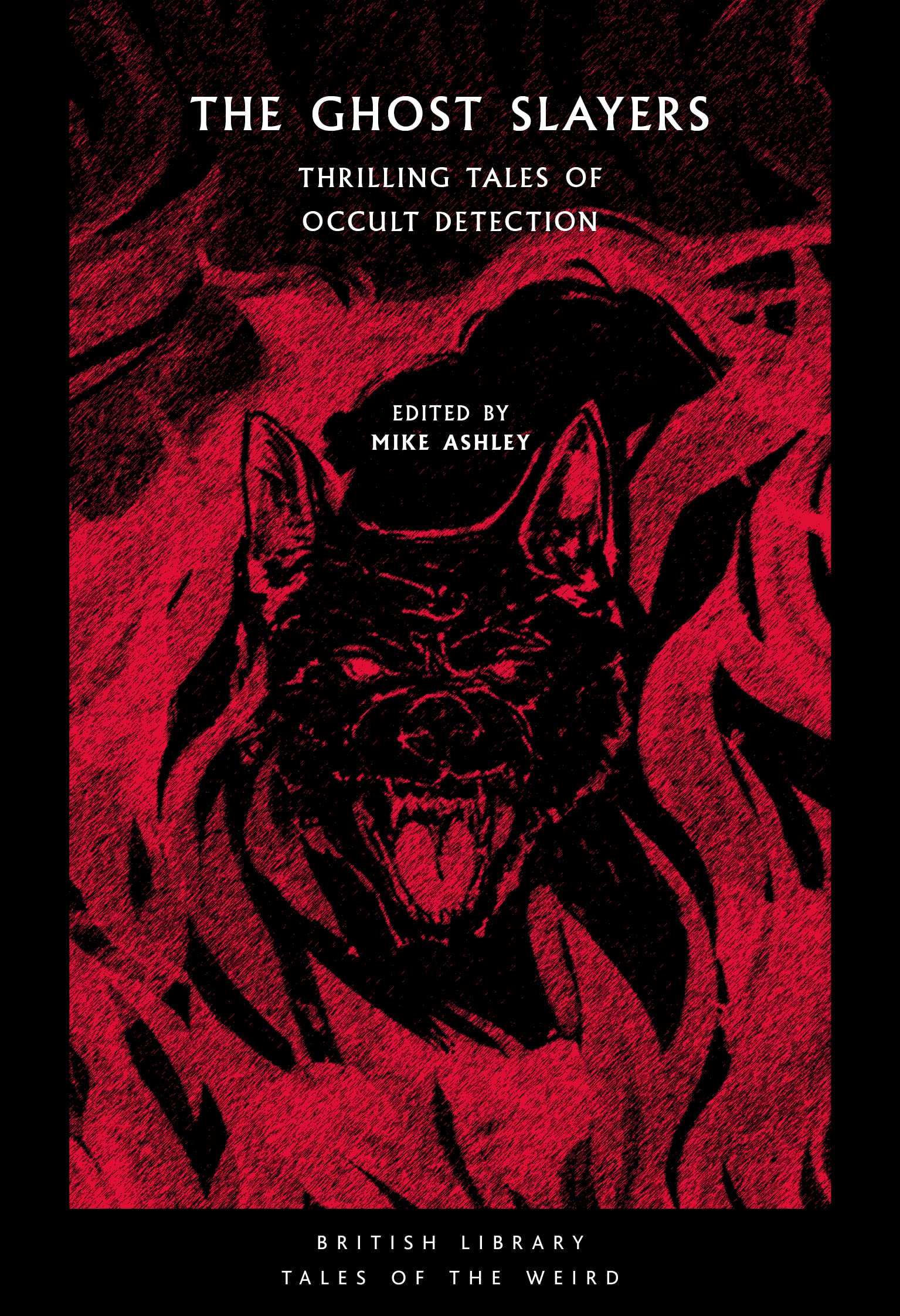
The Ghost Slayers: Thrilling Tales of Occult Detection

Wyrd Britain reviews 'The Ghost Slayers: Thrilling Tales of Occult Detection' edited by Mike Ashley from the British Library Tales of the Weird.
Mike Ashley (ed)
British Library Tales of the Weird

Occult or psychic detective tales have been chilling readers for almost as long as there have been ghost stories. This beguiling subgenre follows specialists in occult lore – often with years of arcane training – investigating strange supernatural occurrences and pitting their wits against the bizarre and inexplicable.

I absolutely love an occult detective story.  It was my gateway drug into all the wyrd wonderfulness that I feature on the Wyrd Britain blog.  I get that for some people they make for both an unsatisfying detective story and an ineffective supernatural one and I occasionally agree but equally I just adore the central idea of a crusading occultist vanquishing malign forces preferably while dressed in a frock coat and weilding a swordstick.  This newest release in the British Library's Tales of the Weird imprint celebrates that figure with stories from some of the key writers alongside several more obscure ones.

The book opens with one of Kate and Hesketh Prichard's 'Flaxman Low' stories, 'The Story of Moor Road' which features an attack of an earth elemental.  It's an entertainingly pulpy tale that keeps Low on the back foot as he attempts to thwart the creatures vampiric attacks.

The next two stories feature perhaps the two most recognisable names with Algernon Blackwood's 'Dr Silence' and William Hope Hodgson's 'Thomas Carnacki'.  The former is represented by perhaps one of his most hands on cases as he attempts to exorcise a haunted house in 'A Psychical Invasion' whilst Carnacki does something similar in 'The Searcher of the End House'.  Both are strong tales but neither are my favourites from their various casebooks with the Carnacki having a particularly muddled Scooby-Doo ending.

I read the various 'Aylmer Vance' stories by Claude & Alice Askew in the Wordsworth Edition a few years back and enjoyed them immensely yet I don't really remember this story, 'The Fear',  featuring yet another haunted house which surprises me as it's an enjoyably creepy tale with a nicely open ending.  Bertram Atkey on the other hand is a new name to me and his occultist detective, 'Mesmer Milan' is an intriguing prospect with his astral travelling and intense personality and the story plays an interesting contrast by placing Milan in some decidedly frivolous company in a winningly different love story.  The following 'Dr. Taverner' tale 'The Death Hound' is one of the more pulpy of occultist Dion Fortune's 'Taverner' stories and again probably wouldn't have been my choice but it works here especially in the company of the preceeding story.

Happily for me I'm on fresh ground for the rest of the book and Moray Dalton's fabulously named 'Cosmo Thor' is a vague sort of character in a story that too closely resembles the 'Aylmer Vance' to particularly satisfy but as a - yet another - haunted house story would perhaps have worked better if I'd not read the that other one earlier the same day.

For the last two stories we travel across the ocean and meet two American investigators both of whom conform - as do most here - to the well trodden path of detective and chronicler.  Gordon Hillman's 'Cranshawe' is all action, racing to investigate strange goings on at a lighthouse whereas Joseph Payne Brennan's 'Lucius Leffing' has a much more sedate and deductive manner.  The former is breathless and a touch inconsequential whereas the latter is thoughtful and more satisfying with a slightly jarring pulp moment in the middle.

With Ashley at the helm I was always fairly confident that this was going to be an rock solid collection coming on the back of his mammoth 'Fighters of Fear' collection of a couple of years ago which it absolutely is but I do have a slight quibble with the number of haunted houses but don't let that put you off. If you've an interest in the idea of the occult detective this should prove a worthwhile read for novice and devotee both.

..........................................................................................

If you enjoy what we do here on Wyrd Britain and would like to help us continue then we would very much welcome a donation towards keeping the blog going - paypal.me/wyrdbritain

Affiliate links are provided for your convenience and to help mitigate running costs.

Saturday, 19 March 2022

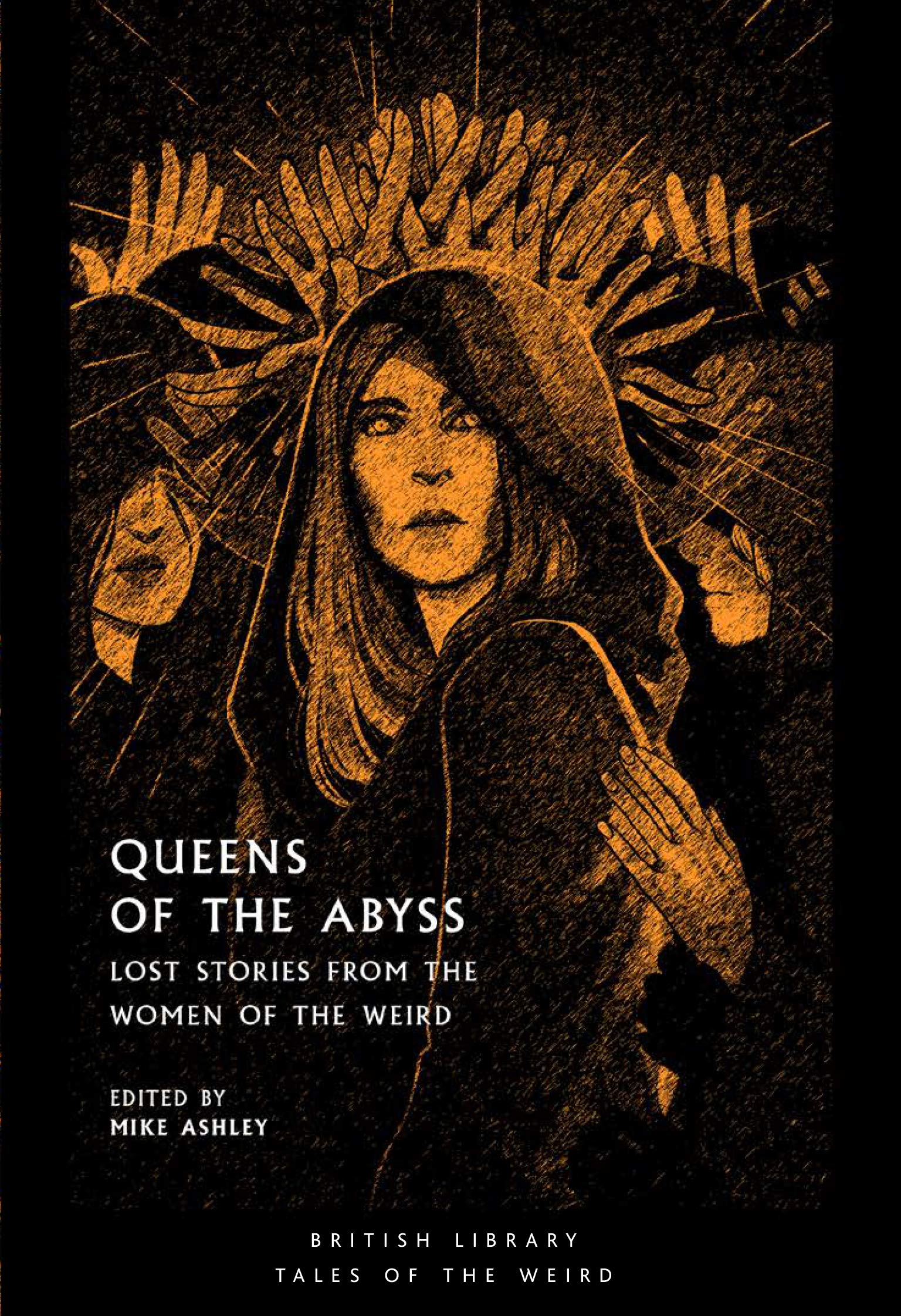
Queens of the Abyss: Lost Stories from the Women of the Weird

Wyrd Britain reviews 'Queens of the Abyss: Lost Stories from the Women of the Weird' edited by Mike Ashley and published by British Library.
Mike Ashley (ed)
British Library

It is too often accepted that during the 19th and early 20th centuries it was the male writers who developed and pushed the boundaries of the weird tale, with women writers following in their wake—but this is far from the truth. This new anthology follows the instrumental contributions made by women writers to the weird tale, and revives the lost authors of the early pulp magazines along with the often overlooked work of more familiar authors. See the darker side of The Secret Garden author Frances Hodgson Burnett and the sensitively-drawn nightmares of Marie Corelli and Violet Quirk. Hear the captivating voices of Weird Tales magazine contributors Sophie Wenzel Ellis, Greye La Spina, and Margaret St Clair, and bow down to the sensational, surreal, and challenging writers who broke down the barriers of the day. Featuring material never before republished, from the abyssal depths of the British Library vaults.

I've read a fair few of these British Library anthologies now and generally (as is often the case with anthologies) they've been a bit of a mixed bag but leaning towards the good and this one is no exception.

Wyrd Britain reviews 'Queens of the Abyss: Lost Stories from the Women of the Weird' edited by Mike Ashley and published by British Library.
Firstly let's address the word 'Lost' in the title. Yes, for the most part these are all pretty damn obscure stories buut I'm not sure you could ever describe Marjorie Bowen's tale of selfishness and indolence, 'The Bishop of Hell', which I probably have in at least a dozen anthologies in my collection.  May Sinclair's 'The Nature of the Evidence' whilst certainly being more obscure than Bowen's tale again hardly counts as a 'lost' story.  The others though are far less anthologised, some deservedly so, but some proved a real treat.

Mary Braddon's 'A Revelation' opens the book in classic Victorian style all familial intrigue and visions from beyond the grave.  It's a solid but fairly uninspiring sort of story. Marie Corelli has a more religious side on display with her story of love, betrayal and forgiveness in the naively charming 'The Sculptor's Angel' whilst Edith Nesbit follows a similar route but with the forgiveness spurned in 'From the Dead'.  Frances Hodgson Burnett's 'The Christmas In The Fog' is a purportedly true Xmas tale of her travel across the Atlantic, it's very Dickensian and very dull whilst Marie Belloc Lowndes gives us a love story that's too convenient by half.

Alicia Ramsey's 'A Modern Circe' is a slight folklorish tale of seductive witchcraft and murder which would probably have been dragged out to novel length these days but it's quite long enough here.  Greye La Spina's vampire tale 'The Anti-Macassar' on the other hand would have benefitted greatly from more room as what is a sprightly and enjoyable story is almost spoiled by a jarring ending.

We slip into science fiction for Sophie Wenzel Ellis' 'White Lady' as a young man falls in love with a plant he's invented much to the dismay of his fiance.  It's suitably silly but if that premise sounds your sort of thing then I'd rather direct your attention towards Valancourt Books' reprint of Ronald Fraser's fabulously bonkers 'Flower Phantoms'.

G.G. Pendarves - who I'm sure I've read before but can't quite place - provides a real highlight with the creepily brutal 'The Laughing Thing' whereas Lady Eleanor Smith's 'Candlelight' was a witty but ultimately rather pointless farce.  Jessie Douglas Kerruish provides a fun tale of 'The Wonderful Tune' that raises the dead but Margaret St Clair's science fiction tale 'Island of the Hands' just felt out of place.

'The Unwanted' of Mary Elizabeth Counselman's rural Alabamatale is enjoyably daft but with a gentle heart before the book ends strongly with Leonora Carrington's fabulously odd 'The Seventh Horse'.

As I mentioned it's another strong entrant into this series but as has been the case with each of the others I've read it's a little patchy although as I've said often before what didn't work for me may well prove to be your favourite and if you've an interest in strange tales of the early 20th century then you really should be exploring this series.

Buy it here - UK / US.

..........................................................................................

If you enjoy what we do here on Wyrd Britain and would like to help us continue then we would very much welcome a donation towards keeping the blog going - paypal.me/wyrdbritain

Affiliate links are provided for your convenience and to help mitigate running costs.

Thursday, 4 February 2021

Weird Woods: Tales from the Haunted Forests of Britain

John Miller - Weird Woods: Tales from the Haunted Forests of Britain (British Library)
John Mller (ed)
British Library

Woods play an important and recurring role in horror, fantasy, the gothic and the weird. They are places in which strange things happen, where you often can’t see where you are or what is around you. Supernatural creatures thrive in the thickets. Trees reach into underworlds of earth, myth and magic. Forests are full of ghosts.

In this new collection, immerse yourself in the whispering voices between the branches in Wistman’s Wood on Dartmoor, witness an inexplicable death in Yorkshire’s Strid Wood and prepare yourself for an encounter with malignant pagan powers in the dark of the New Forest. This edition also includes notes on the real locations and folklore which inspired these deliciously sinister stories.

It's been a while since I picked up any of these British Library Tales of the Weird books but the've continued to release some very intriguing collections and I've grabbed three recently which have caught my eye.  This one, with my fondness for arboreal shenanigans, was always gong to be a must buy and indeed proved to be a solid collection of, mostly, entertaining tales of the deep dark woods.

It doesn't get off to a particularly auspicious start with the anonymous opener, 'Whisperer in the Woods', lifted from the pages of Charles Dickens' literary journal ' All Year Round'.  It's a poorly written and fairly common or garden sort of story of wronged widows and plucky sons and help from beyond and I'm not entirely convinced by the weird woodiness of Edith Nesbit's 'Man Sized in Marble' but a story as good as this always merits a reread especially on a cold wet winter's night.

Gertrude Atherton's 'The Striding Place' puts a gentleman pining and - sort of - searching for his lost friend into a battle with the elemental force of a raging river that runs through the woods in a story with a distinct but typically circuitous homosexual undertones and a sudden and jarring ending worthy of Robert Aickman.  Another classic tale with distinct homoerotic undertones comes next in the form of E.F. Benson's 'The Man Who Went Too Far' another story I'm always happy to reread.

We have a slght dip with the next two stories as neither W.H. Hudson's 'An Old Thorn' nor Elliott O'Donnell's 'The White Lady' have much to recommend although the former conjures up an interesting initial vibe before losing it's way and petering out.

We are on much more solid ground with Algernon Blackwood's 'Ancient Lights' as the venerable master spins a yarn concerning a fairy wood that reads like a forebear of Robert Holdstock's 'Mythago Wood' books.

We've and interesting and haunting proto-feminist tale of a man's selfish desire and a young woman's love of her home in Mary Webb's 'The Name Tree' whilst in Walter de la Mare's 'The Tree' a pompous and vulgar fruit merchant travels to visit his estranged artist brother who lives and works in the shadow of an exotic tree that is his inspiration.

Marjorie Bowen's 'He Made a Woman...' is a quick and beguiling riff on the story of Blodeuwedd taken from the Mabinogion and also the inspiration for Alan Garner's 'The Owl Service'.  This is followed by one of M.R. James' later and lesser tales, 'A Neighbour's Landmark', which, with it's inocuous story of a haunted wood, is lacking some of the panache of his clasic tales.

The book ends oddly with 'N' the last great flowering of Arthur Machen's genius.  Certainly there's a weird wood in there as this is one of the elder statesman of the weird's stories of the thin places but it feels out of place here and far more at home in the London collection the The British Library have published at the same time.  I rarely turn down the opportunity to reread Machen though and this is a sublime end to an enjoyable collection.

Buy it here - UK / US.

..........................................................................................

If you enjoy what we do here on Wyrd Britain and would like to help us continue then we would very much welcome a donation towards keeping the blog going - paypal.me/wyrdbritain

Affiliate links are provided for your convenience and to help mitigate running costs.

Wednesday, 19 February 2020

Doorway to Dilemma: Bewildering Tales of Dark Fantasy

Mike Ashley (ed)
British Library

“The events which I purpose detailing are of so extraordinary a character that I am quite prepared to meet with an unusual amount of incredulity and scorn…”
Welcome to the realm of Dark Fantasy, where the weird prevails and accounts of unanswerable dilemma find their home. Gathered within these pages are twisted yarns, encounters with logic-defying creatures and nightmarish fables certain to perplex and beguile.
So join us as we journey across the threshold, deep into the Library’s vaults where nineteen deliciously dark and totally dumbfounding stories await. These tales, plucked from long-lost literary magazines and anthologies spring to life again to embody this most mesmerising of genres.


 First things first, I'm going to say up front that I really hate the term 'Dark Fantasy'.  In the introduction here Ashley gives a brief rundown of the history of the term but I'm sorry but to me it just sounds like a euphemism for S&M porn of the various shades of grey variety.

Lord Dunsany
Beyond the dubious title what we have is a bit of an uninspiring collection of tales that fails to excite.  There are some fine tales in amongst and indeed one actual classic in Arthur Machen's 'The White People' but there are a couple of absolute stinkers too (that I'm not going to name).

Of those authors I know I must admit to being less than besotted with Lord Dunsany as most of what I've read has been a little too fabley for my tastes (I am open to recommendations that'll change my mind) and the H.G Wells tale here is very much of the same ilk.  I was though much taken by 'Fear' written by Wells' wife Catherine and Lucy Clifford's 'The New Mother' was a bit of fun even if again it fell into that pesky fable category.

Of the others I found very little of interest and it was all a bit of a slog that I had to intersperse with more engaging books in order to even finish it.  If however you have a more deeply developed love of a fable or a folktale then you may find more to love here, I wish I had because I've thoroughly enjoyed the others in this series and was looking forward to this one.

Buy it here - Doorway to Dilemma

..........................................................................................

If you enjoy what we do here on Wyrd Britain and would like to help us continue then we would very much appreciate a donation towards keeping the blog going - paypal.me/wyrdbritain

Tuesday, 15 October 2019

Mortal Echoes: Encounters With the End

Greg Buzwell (ed)
British Library Tales of the Weird

A strange figure foretells tragedy on the railway tracks. A plague threatens to encroach upon an isolated castle. The daughter of an eccentric scientist falls victim to a poisonous curse.
Yet for all its certainty and finality, death remains an infinitely mysterious subject to us all. The stories in this anthology depict that haunting moment when characters come face to face with their own mortality.
Spanning two centuries, Mortal Echoes features some of the finest writers in the English language – including Daphne du Maurier, Edgar Allan Poe, Graham Greene and H. G. Wells. Intriguing, unsettling and often darkly humorous, this collection explores humanity’s transient existence, and what it means to be alive.


Another in the series of ghoulish tales from the British Library.  They've done about a dozen of these over the last little while and I  thought it was about time I got properly stuck into them.  The first one I read (Glimpses of the Unknown) was a fun excursion into the lesser known corners of the golden age of supernatural fiction.  This one takes a look at various visions of mortality.

In it's pages editor Buzwell includes a nice mix of real classics such as Charles Dickens' 'The Signalman', Sheridan Le Fanu's 'Strange Event in the Life of Schalken the Painter' and Edgar Allan Poe's sublime 'The Masque of the Red Death' and a number of minor greats, Saki's 'Laura', Marjorie Bowen's 'Kecksies' and Robert Aickman's 'Your Tiny Hand Is Frozen' all of which will be familiar to connoisseurs of ghostly anthologies but all of which reward repeated readings.

We have several tales by well known authors who maybe aren't particularly associated with the supernatural such as Graham Greene's tale of an unpleasant encounter in 'A Little Place off the Edgware Road', Daphne du Maurier's murderous lady 'Kiss Me Again, Stranger' and a cosmic excursion in H.G. Wells' 'Under the Knife'.

Beyond these there are a few lesser known authors such as the under-rated May Sinclair, represented here by her fantastic 'Where Their Fire is Not Quenched', the darkly funny 'The School' by Donald Barthelme and Charlie Fish's amusingly daft 'Death by Scrabble'.

The problem with themed anthologies is they can quickly become quite tiresome but Buzwell has put together a nicely varied selection that entirely avoids this pitfall and this is one of the most satisfying and enjoyable anthologies I've read in quite a while.

Buy it here - Mortal Echoes: Encounters with the End (Tales of the Weird)

..........................................................................................

If you enjoy what we do here on Wyrd Britain and would like to help us continue then we would very much appreciate a donation towards keeping the blog going - paypal.me/wyrdbritain

Tuesday, 19 February 2019

Glimpses of the Unknown

Glimpses of the Unknown mike ashley british library
Mike Ashley (ed)
British Library

A figure emerges from a painting to pursue a bitter vengeance; the last transmission of a dying man haunts the airwaves, seeking to reveal his murderer; a treasure hunt disturbs an ancient presence in the silence of a lost tomb.
From the vaults of the British Library comes a new anthology celebrating the best works of forgotten, never since republished, supernatural fiction from the early 20th century. Waiting within are malevolent spirits eager to possess the living and mysterious spectral guardians—a diverse host of phantoms exhumed from the rare pages of literary magazines and newspaper serials to thrill once more.

Over the last couple of months the British Library has begun publishing a veritable treasure trove of strange macabre and outre fiction from it's vaults with collections featuring the work of such luminaries as Walter de la Mare and M.R. James alongside less well known writers like Charlotte Riddell.  This particular collection celebrates the forgotten and the unloved as anthologist supreme Mike Ashley here presents eighteen previously unreprinted tales from the golden age of ghostly fiction (1890 - 1920) including a previously lost story by E.F. Benson.  It has to be said upfront that there are no unrecognised classics of the genre here but there are very few stinkers, a couple of pretty nifty ones and a host of readable ones.

The book begins strongly with Hugh E. Wright's 'On The Embankment' an enjoyably creepy, if a tad moralistic, story of a ghostly tramp which is followed by an unusually haunted house in 'Mystery of the Gables' that gives author Elsie Norris what feels like a very modern sensibility.

The welcome strangeness of 'Phantom Death' by pseudonymous Huan Mee is sandwiched by two of the books absolute stinkers before it once again finds it's feet with a poignant tale of obsession and redemption in 'The soul of Maddalina Tonelli' by James Bar one of several authors here I'd like to read more by.

Jack Edwards' 'Haunted' is a nifty piece of weird fiction about a man haunted by an amorphous spectral presence before crime writer Percy James Brebner gives a slightly more traditional ghostly tale with one foot in it's author's preferred genre.

E.F. Benson
E.F. Benson
The next two contributions both take a more melancholy path as love proves death is no barrier in Guy Thornes sentimental but lovely 'A Regent of Love Rhymes' and that love sometimes comes too late in 'Amid the Trees' by Francis Xavier.

Neither Mary Schultze's 'The River's Edge' with it's overtly and overly religious tale of a ghostly rescue nor Mary Reynolds' anticlimactic 'A Futile Ghost' provide much of a distraction but Lumley Deakin's 'Ghosts' with it's enigmatic central character 'Cyrus Sabinette' proved to be possibly the gem of the book and I'd love to read more of the rest of the series of stories he wrote featuring the character.

The book's sole US contributor, Elizabeth Jordon, is represented by her story 'Kearney' that tells of an accidental if impetuous shooting that leaves a young military man haunted by his victim whilst Philippa Forest provides a Holmesian tale of murder albeit one with a ghostly heart.

Eric Purves' 'The House of the Black Evil' is an oddly affecting piece of weirdness with a slightly week ending but an interesting premise that for some reason reminded me of Hope Hodgson's 'Carnacki' stories.  Following this is the aforementioned lost E.F.Benson story, 'The Woman in the Veil', it's not great.  What it is is a perfectly functional but slightly tired story of ghostly comeuppance of the type we've already seen in the Brebner story before the book ends with a fantastical adventure tale of ancient dead and elemental forces that feels both an odd fit with the rest of the rest of the book and a strange place to end.

As I mentioned at the beginning of this write up Ashley is a seasoned pro at this anthology curating lark and with the aid of the British Library has compiled a fine collection weighted heavily to the good with only a few unsatisfying or dubious moments.  This is only one book in what appears to be an ongoing series under the umbrella title of 'British Library Tales of the Weird' that looks to be a very fine selection indeed.

Buy it here - Glimpses of the Unknown: Lost Ghost Stories (Tales of the Weird)

..........................................................................................

If you enjoy what we do here on Wyrd Britain and would like to help us continue then we would very much appreciate a donation towards keeping the blog going - paypal.me/wyrdbritain